Trump Backs United Ireland Vision During State Visit
US President Donald Trump expresses support for Irish unification during Ireland visit, stating it should happen now. UK and unionists respond swiftly.
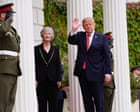
Trump's Unexpected Endorsement of United Ireland
During an official state visit to the Republic of Ireland, US President Donald Trump has made a striking statement regarding united Ireland, declaring he would "love" to see the island unified and suggesting the timing should be immediate. The remarks, delivered at the beginning of a two-day engagement with Irish officials and dignitaries, represent an unprecedented intervention by a sitting American president in matters concerning Irish constitutional politics and the future status of Northern Ireland.
Trump's comments about united Ireland have thrust the sensitive political question into the international spotlight, generating immediate diplomatic responses from key stakeholders across the Irish Sea. His statement that unification "may as well happen now," combined with his apparent support for the concept, signals a notable shift in how the Irish question is being discussed in American political circles at the highest level.
Political Reactions and Diplomatic Fallout
The unexpected nature of Trump's intervention prompted swift and direct responses from the United Kingdom government and prominent unionist political leaders in Northern Ireland. Officials from both quarters moved quickly to distance themselves from the president's statements and to reaffirm their positions regarding the constitutional settlement established by the Good Friday Agreement.
UK government representatives expressed concerns about Trump's remarks, viewing them as an unwelcome intervention in matters they consider internal to the United Kingdom. The response highlighted the delicate balance that exists in current Anglo-American relations, particularly regarding historical and constitutional issues affecting British territories and constituent nations.
Northern Ireland Unionist Response
Unionist leaders in Northern Ireland, who have traditionally opposed moves toward constitutional change and Irish unification, were equally vocal in their rejection of Trump's apparent endorsement. These political figures emphasized their commitment to remaining part of the United Kingdom and questioned the appropriateness of foreign leaders commenting on internal constitutional matters affecting the island of Ireland.
The unionist community's response underscored the persistent divisions that characterize contemporary Irish politics, where questions of national identity, constitutional status, and political allegiance continue to generate significant debate and occasional tension among different communities.
Context of Trump's Ireland Visit
Trump's visit to Ireland represents a significant diplomatic engagement between the United States and the Republic of Ireland. The two-day itinerary includes various official meetings, cultural events, and diplomatic ceremonies designed to strengthen bilateral relations between the two nations. However, Trump's comments about united Ireland have largely overshadowed the planned agenda, becoming the defining narrative of his time in the country.
The president's visit comes at a time when discussions about Irish unification have gained renewed prominence in public discourse, driven by various demographic, economic, and political factors. Opinion polls in recent years have shown shifting attitudes toward constitutional change among certain segments of the Irish population, particularly in younger age groups.
The Good Friday Agreement Framework
Trump's intervention in discussions about united Ireland occurs within the context of the Good Friday Agreement, the internationally recognized peace accord signed in 1998 that established the current constitutional and political framework for Northern Ireland. The agreement provides mechanisms for potential future referendums on Irish unification, though specific conditions and triggers for such votes remain subjects of ongoing political negotiation and discussion.
The accord has successfully maintained peace on the island of Ireland for over two decades, though questions regarding its long-term sustainability and potential evolution continue to generate scholarly debate and political discussion among commentators, academics, and political leaders on both sides of the Irish border.
International Dimension of Irish Politics
Trump's comments highlight the extent to which Irish constitutional questions have become matters of international interest and diplomatic significance. The involvement of the United States in discussions about Irish political futures reflects the historical connection between Irish immigrants and American society, as well as contemporary geopolitical considerations affecting transatlantic relations.
The president's willingness to comment openly on united Ireland matters suggests that American political leaders increasingly view Irish political developments as relevant to broader foreign policy considerations. This represents a departure from traditional American diplomatic practice, which has generally avoided taking explicit positions on the constitutional status of Northern Ireland.