Tragic Helicopter Collision in Greece Claims Two Firefighting Crew Members
Two crew members died in a helicopter collision during firefighting operations in Greece. A British pilot and Greek crew member survived the incident.
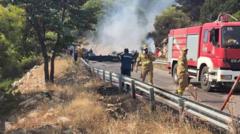
Fatal Collision During Firefighting Operations in Greece
A devastating helicopter collision in Greece has resulted in the loss of two crew members during active firefighting operations. The tragic incident involved firefighting aircraft engaged in emergency response efforts, highlighting the inherent risks faced by aviation personnel operating in challenging conditions.
The helicopter collision occurred during coordinated firefighting activities in Greece, claiming the lives of one Danish national and one Greek national. The accident underscores the dangerous nature of aerial firefighting missions, where pilots and crew members operate under extreme pressure and difficult environmental circumstances to combat wildfires and protect communities.
Survivors and Crew Composition
Despite the fatal outcome of the helicopter collision in Greece, two crew members managed to survive the catastrophic event. A British pilot successfully survived the incident, demonstrating remarkable resilience in a life-threatening situation. Additionally, another Greek crew member also survived the collision, escaping the wreckage with their life intact.
The survival of these two individuals marks a critical distinction in what could have been a complete tragedy. Emergency responders worked swiftly to provide medical assistance and extract survivors from the damaged aircraft following the helicopter collision.
Impact on Firefighting Operations
The helicopter collision in Greece raises significant concerns about the safety protocols governing aerial firefighting missions across the Mediterranean region. These operations are essential for combating seasonal wildfires that threaten communities, forests, and critical infrastructure throughout southern Europe.
Firefighting crews operating helicopters face multiple hazards simultaneously, including low-altitude flying, sudden weather changes, smoke visibility limitations, and the coordination challenges inherent in multi-aircraft operations. The tragic helicopter collision serves as a sobering reminder of these operational dangers.
International Crew Involvement
The composition of the affected crew reflects the international nature of European firefighting cooperation. With Danish, Greek, and British personnel involved in the helicopter collision, the incident highlights how cross-border aviation teams collaborate during major emergency response efforts.
Such international cooperation enables countries to pool resources and expertise during peak fire seasons, but it also emphasizes the universal risks that aviation professionals undertake regardless of nationality. The loss of Danish and Greek crew members, alongside the survival of British and Greek personnel, demonstrates the shared sacrifice inherent in emergency response operations.
Investigation and Safety Measures
Following the helicopter collision in Greece, authorities initiated comprehensive investigations to determine the precise causes and contributing factors. Understanding what led to this catastrophic event is essential for implementing corrective measures and preventing similar incidents in the future.
Safety improvements resulting from accident investigations typically include enhanced communication protocols between aircraft, updated separation procedures, improved weather monitoring systems, and refined crew training regimens. These measures aim to reduce collision risks during complex firefighting missions.
Broader Context of Aviation Safety
The helicopter collision in Greece occurred within a broader context of aviation safety concerns affecting emergency response operations. Firefighting aircraft, whether helicopters or fixed-wing planes, operate in inherently high-risk environments where speed, precision, and coordination are critical.
Advances in technology, including improved collision avoidance systems, real-time weather tracking, and enhanced communication networks, continue to evolve. However, human factors, environmental conditions, and operational pressures remain ongoing challenges in aerial firefighting.
The tragic helicopter collision serves as a reminder of the dedication and sacrifice of firefighting personnel who place themselves in harm's way to protect lives and property from natural disasters. The incident will likely influence future safety discussions and policy considerations within European aviation and emergency management sectors.


