Helium-3 Moon Mining: The Future Energy Source
Discover why Helium-3 moon mining could revolutionize energy production. Learn about this rare isotope's potential and lunar extraction plans.
Understanding Helium-3 and Its Growing Importance
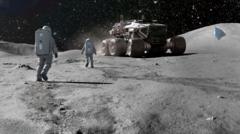
Helium-3 moon mining represents one of the most ambitious energy projects of the 21st century. This rare isotope, primarily found in lunar regolith, has become increasingly valuable due to its potential applications in clean energy production and advanced technologies. Unlike traditional terrestrial sources, Helium-3 exists in abundance beneath the moon's surface, making lunar extraction a logical solution to meet anticipated global demand.
The isotope itself is a stable, non-radioactive form of helium with significant advantages over conventional energy sources. Scientists and energy experts have recognized that Helium-3 could fundamentally transform power generation through fusion technology, offering cleaner and more efficient alternatives to fossil fuels and traditional nuclear reactors.
The Current Market Value and Future Demand
Current Helium-3 prices reflect its scarcity on Earth, with supplies remaining critically limited. Industrial and scientific applications drive present demand, yet forecasts indicate that consumption will surge dramatically in coming decades. This price surge and demand projection have motivated governments and private companies to seriously consider Helium-3 moon mining as an economically viable venture.
Energy analysts project that as fusion technology matures and becomes commercially viable, the demand for this isotope will increase exponentially. Companies and nations recognizing this opportunity are positioning themselves to lead the lunar resource extraction industry, viewing Helium-3 moon mining as essential infrastructure for future energy independence.
Why the Moon Holds Abundant Helium-3 Reserves
The lunar surface accumulated Helium-3 over billions of years through solar wind interactions. Unlike Earth, which benefits from atmospheric protection, the moon received direct exposure to cosmic radiation, embedding this isotope deep within its regolith. Helium-3 moon mining operations would extract this material relatively efficiently, as the resource lies within accessible surface layers rather than requiring deep excavation.
Scientific surveys have mapped lunar regions with the highest Helium-3 concentrations, identifying optimal extraction zones. These studies demonstrate that sufficient quantities exist to support large-scale Helium-3 moon mining operations capable of supplying global energy needs for centuries.
Current Plans and Technological Challenges
Multiple space agencies and private enterprises have developed preliminary concepts for Helium-3 moon mining infrastructure. These plans typically involve establishing mining stations, processing facilities, and transportation systems to return extracted material to Earth. Japan, Russia, China, and various international space organizations have publicly announced intentions to pursue such initiatives.
The primary technical challenge involves creating equipment capable of extracting Helium-3 from lunar soil under extreme environmental conditions. Mining operations would need to function in the moon's vacuum environment, handle dramatic temperature fluctuations, and manage the abrasive nature of lunar dust. Additionally, developing efficient transport mechanisms to return processed Helium-3 to Earth remains a significant engineering hurdle.
Economic and Environmental Implications
Successful Helium-3 moon mining could establish a sustainable energy economy reducing dependence on fossil fuels. The environmental benefits are substantial, as fusion reactions produce minimal waste and no greenhouse gas emissions. This clean energy source addresses climate change concerns while providing reliable power generation.
Economic projections suggest that Helium-3 moon mining industries could generate unprecedented wealth and employment opportunities. However, initial investment costs remain considerable, requiring international cooperation and sustained funding commitments. Early adopters may secure competitive advantages in global energy markets.
International Cooperation and Space Law
The Outer Space Treaty of 1967 prohibits national appropriation of celestial bodies, complicating Helium-3 moon mining operations. However, many legal experts interpret this framework as permitting resource extraction for commercial purposes. Nations and companies are negotiating frameworks to establish mining rights while respecting international agreements.
Future governance structures will likely require international coordination and shared revenue models. Organizations like the United Nations Office for Outer Space Affairs are developing preliminary discussions about lunar resource management and Helium-3 moon mining regulations.
Timeline and Future Outlook
While Helium-3 moon mining remains primarily theoretical, technological advancement accelerates timelines. Most experts anticipate that pilot operations could commence within the next two to three decades, contingent on fusion reactor development and investment commitments. Successful implementation would represent a transformative moment in human energy history.


