Emergency EU Summit Addresses Ceuta Migrant Crisis
EU emergency meeting tackles escalating migrant crossings in Ceuta enclave. Spain discusses crisis with member states amid rising tensions over border control.
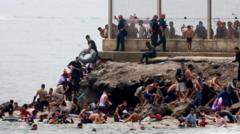
EU Convenes Urgent Assembly on Ceuta Border Situation
European Union officials have scheduled an emergency session to address the intensifying Ceuta migrant crossings that have strained diplomatic relations across the bloc. The Spanish autonomous city, nestled on the African continent, has become a focal point for heated discussions among EU member nations regarding immigration policy and border management.
Diplomatic tensions have escalated significantly as Spain navigates unprecedented challenges in managing the flow of migrants attempting to enter the strategically located enclave. Officials from multiple EU countries have raised concerns about the handling of arrivals and the broader implications for continental immigration enforcement.
Background on Ceuta's Geographic Significance
Ceuta stands as one of Spain's two North African enclaves, positioned directly across from Morocco. Its unique geographical location makes it a critical point of entry for migrants seeking passage into European territory. The Spanish territory has historically experienced periodic surges in migrant arrivals, though recent months have witnessed particularly acute pressure on local infrastructure and resources.
The enclave's proximity to Morocco, combined with its status as EU territory, creates complex jurisdictional challenges. Border authorities face constant pressure to maintain security while managing humanitarian concerns. This delicate balance has become increasingly difficult as migration patterns have intensified.
EU Member States Express Divergent Perspectives
The EU emergency meeting brings together nations with competing interests and viewpoints on immigration policy. While Spain emphasizes the burden placed upon its resources and territorial integrity, other member states have raised questions about burden-sharing and regional responsibility distribution.
Some EU partners have questioned whether existing protocols adequately address the scale of current movements. Discussions focus on establishing more coordinated approaches to border control mechanisms and ensuring equitable distribution of responsibility among member nations. The debate reflects broader philosophical divisions within the European Union regarding immigration policy.
Impact on Local Communities and Infrastructure
Residents of Ceuta have experienced significant disruptions as local facilities struggle to accommodate incoming populations. Schools, healthcare facilities, and social services have all reported capacity constraints. The sudden influx has placed enormous pressure on municipal governance and public administration systems.
Local authorities have appealed to both Spanish national government and EU institutions for enhanced support and resources. The situation highlights the disparity between resource availability and actual needs on the ground, raising questions about sustainable solutions for managing migration flows.
Spain's Position in International Negotiations
Spanish representatives have emphasized that the country bears disproportionate responsibility for managing arrivals in the Ceuta enclave, given its geographic location. Madrid has called for greater solidarity from other EU member states and more equitable responsibility-sharing mechanisms.
The Spanish government has stressed the necessity of coordinated European responses rather than allowing individual member nations to face challenges alone. Officials argue that migration represents a continent-wide issue requiring collective action and unified policy frameworks.
Broader European Immigration Challenges
The Ceuta situation reflects wider patterns of migration pressure affecting multiple European borders. From Mediterranean coastal zones to continental land borders, EU nations grapple with managing arrivals while maintaining security protocols and humanitarian standards.
The emergency assembly provides an opportunity to examine whether current EU immigration frameworks adequately address contemporary challenges. Policymakers are expected to evaluate existing agreements and consider whether modifications to protocols could better distribute responsibilities across member states.
Future Outlook and Expected Outcomes
The emergency session will likely produce discussions on enhanced cooperation mechanisms, resource allocation, and improved coordination protocols. EU officials anticipate examining whether bilateral agreements between Spain and Morocco could contribute to managing flows more effectively.
Long-term solutions will probably require addressing root causes of migration while simultaneously strengthening border management capacities. The meeting represents an important moment for EU institutions to demonstrate capability in addressing migration-related crises through collaborative diplomacy and coordinated policy responses.
As the gathering unfolds, all eyes will be on whether participating nations can forge consensus on shared approaches to Ceuta migrant crossings and establish frameworks for future cooperation. The resolution of these discussions may have significant implications for EU immigration policy development in coming months.


