Artificial Ice Pyramids: India's Solution for Mountain Water Security
Discover how Himalayan villages are building artificial ice pyramids to ensure sustainable water supply for spring crops. Innovative glacier technology.
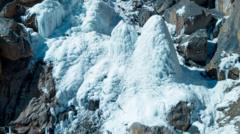
Artificial Ice Pyramids: India's Revolutionary Water Solution
High in the mountains of India's northern regions, innovative communities are turning to artificial ice pyramids as a groundbreaking method to address critical water scarcity. These remarkable structures represent a fascinating intersection of traditional knowledge and modern engineering, designed specifically to preserve water resources for agricultural seasons when mountain villages face severe drought conditions. The artificial ice pyramid concept has emerged as a vital solution for farmers who depend entirely on glacial melt to irrigate their crops during spring months.
Understanding the Technology Behind Ice Pyramids
The creation of artificial ice pyramids involves a sophisticated process that captures winter water and freezes it into massive ice formations. During the coldest months, specially designed channels direct water to high-altitude locations where naturally frigid temperatures ensure complete freezing. Engineers pump water uphill using minimal energy resources, allowing gravity and extreme mountain cold to do the heavy lifting. These cone-shaped structures can reach impressive heights and store enormous quantities of frozen water that would otherwise flow downhill or evaporate during dry seasons.
How the Freezing Process Works
The mechanics of creating artificial ice pyramids rely on precise timing and geographic positioning. Water is channeled through underground pipes to elevated plateaus where temperatures plummet well below freezing even during transitional seasons. The water emerges from outlets positioned at the pyramid's apex, cascading down the slope in thin sheets that freeze almost instantaneously upon contact with the frigid mountain air. Layer by layer, ice accumulates until towering formations take shape, sometimes reaching heights of 30 to 40 meters. This ingenious approach essentially creates a frozen water reservoir that acts as a backup supply system.
The Impact on Himalayan Agricultural Communities
For mountain farmers across India's Himalayan regions, access to reliable water during spring months directly determines crop success and family survival. Traditional irrigation methods fail when glaciers retreat due to climate change and shifting seasonal patterns. The artificial ice pyramid technology provides a dependable alternative that communities can control and manage locally. Farmers no longer face the uncertainty of unpredictable glacial melt timing, allowing them to plan planting schedules with greater confidence.
Economic Benefits for Rural Mountain Villages
The implementation of artificial ice pyramids has generated tangible economic improvements for rural communities. Crop yields have increased substantially as farmers gain access to consistent water supplies throughout critical growing seasons. Improved harvests translate to better household incomes, enhanced food security, and reduced migration from these remote mountain settlements. Agricultural productivity improvements have encouraged younger generations to remain in their home villages rather than seeking employment in distant urban centers.
Sustainable Water Management in Mountain Regions
Climate change poses unprecedented challenges to mountain ecosystems across the Himalayas. Glaciers are retreating at alarming rates, and traditional water sources are becoming increasingly unreliable. Artificial ice pyramids represent an adaptive strategy that helps communities maintain water independence despite changing environmental conditions. Unlike resource-intensive desalination plants or long-distance water transport systems, this technology requires minimal external infrastructure and operates using natural processes. Communities maintain ownership and control over their water resources, ensuring long-term sustainability and independence.
Integration with Traditional Knowledge
The success of artificial ice pyramid technology demonstrates how indigenous understanding combined with modern engineering creates effective solutions. Local farmers possessed centuries-old knowledge about mountain hydrology and seasonal patterns that engineers incorporated into pyramid design and construction. This collaborative approach has proven far more effective than imposing external technical solutions without community input. The technology respects cultural practices while addressing contemporary environmental challenges.
Scaling Up the Artificial Ice Pyramid Initiative
As word spreads about successful ice pyramid installations, other mountain communities throughout the Himalayas have begun implementing similar projects. Government agencies and NGOs now provide technical support and funding to expand the program across affected regions. Several states in northern India have officially recognized artificial ice pyramids as part of their water management strategy. The scalability of this approach offers hope that thousands of additional villages could benefit from this innovative technology within the coming decade.
Challenges and Future Development
Despite impressive results, challenges remain in expanding artificial ice pyramid technology. Construction requires careful site selection and precise engineering calculations for optimal performance. Initial capital investment, while modest compared to conventional infrastructure projects, still presents obstacles for the poorest communities. Ongoing research focuses on improving efficiency, reducing construction costs, and adapting the technology for regions with varying climatic conditions. Scientists continue refining pyramid design to maximize ice accumulation while minimizing maintenance requirements.
Conclusion: A Blueprint for Climate Adaptation
Artificial ice pyramids exemplify how communities can develop locally appropriate solutions to global challenges like climate change and water scarcity. The Himalayan villages pioneering this technology have created a model that offers hope to mountain communities worldwide facing similar environmental pressures. As glaciers continue shrinking and water becomes increasingly precious, such innovative approaches will prove essential for human survival in fragile mountain ecosystems. The artificial ice pyramid stands as a testament to human ingenuity and the power of combining traditional wisdom with modern technology to secure a sustainable future for India's mountain villages.


